

Let's Stop Using the Term "Non-Hierarchical"
My controversial polyamory take

I know this subject sparks a lot of controversy among non-monogamous folks - but I think it’s time we stop using the terms “hierarchical” and “non-hierarchical” in polyamory. If you’re unfamiliar with these terms, non-hierarchical polyamory describes the practice of polyamory where all partners hold equal “importance”. A key distinction between non-hierarchical and hierarchical polyamory is that in non-hierarchical polyamory, there are no primary, secondary or tertiary partners - instead, all partners are considered equal. Proponents of this type of polyamory also distinguish it by specifying that no partner holds “veto power” over another. This means that no single partner can dictate what happens in their partner’s relationships with others, and that everyone’s autonomy is equally respected. But shouldn’t everyone’s autonomy be equally respected in relationships, anyway?
Non-hierarchy is unrealistic
My argument for trashing this term is not that I am against non-hierarchy - because I love non-hierarchy in theory, and I believe it should be a value that guides all of us in our relationships. I just don’t believe non-hierarchy is possible in practice. The idea that every partner holds equal importance is unrealistic - so why would you set yourself up for failure? Every relationship you have is unique, and so each relationship will hold a different amount of priority or importance depending on a number of factors. Some factors that might impact a relationship’s priority could be how long you’ve been together, how much intimacy you’ve shared, and how interconnected your lives are - just to name a few. Even if you decide all of your partners are equally important to you, there will be times where you’re forced to prioritize one partner over the other.
As an example, let’s say I have a partner who is married with children. We have a date scheduled for tonight, but their co-parent is dealing with an emergency and needs my partner to stay home with the kids. Would I expect my partner to consult with me for my input before agreeing to watch their own children, like non-hierarchical polyamory requires? Personally, I wouldn’t - I would honestly expect that their co-parenting relationship holds some importance over ours. I might be disappointed that they had to cancel, but frankly, I’d probably be turned off if they considered their romantic relationship with me to be of equal importance to the health and well-being of their child. But if this partner stated they were “non-hierarchical” without getting into detail about how their co-parenting relationship may take priority over ours, I may feel misled or betrayed when they cancel on me to attend to their co-parenting duties.
Blanket descriptors are misleading
Although terms like these help to categorize our relationships, they often lead to communication breakdown and misunderstandings, and non-hierarchical polyamory is a term that there tends to be A LOT of misunderstanding of. I find this is a pattern in all of ENM - people use the word ‘poly’ without knowing what it actually means, often causing harm to others by using non-monogamy as an excuse for poor behavior. The problem is that if someone declares that they practice non-hierarchical polyamory, it paints a picture to a brand new partner that they will be afforded the same rights and privileges in the relationship as a nesting partner they’ve had for ten years. And yes - everyone should have the same basic rights and respect for their personal autonomy and needs in their relationships, but that doesn’t mean all partners should have the same access.
Anyone who follows me closely knows that relationship anarchy guides the way I think about relationships as a whole. This may seem hypocritical, then, for me to say I don’t believe in non-hierarchy, since relationship anarchy rejects traditional hierarchies. But I can be both a relationship anarchist and reject the term “non-hierarchical polyamory” because relationship anarchy centers consent and open communication in relationships. In translation, you can practice hierarchy if all those you are in relationship with are knowingly consenting to it. If hierarchy exists, it is not there because of assumption - it is there on purpose. But if you’re claiming to be non-hierarchical while you have a long term nesting partner who automatically gets more access to you by nature of the relationship, new partners don’t actually have informed consent. They might hear you say “non-hierarchical” and think “amazing! They will prioritize me just as much as their other partners!” - but they don’t have access to your free time or shared resources at the same rate the partner you live with does. Realistically, responsibilities that come along with co-habitation will inevitably have to take precedence now and then.
I also know that it’s impossible for me to actually treat all of my relationships with the same priority - nor do I want to do that. A close friend who is willing to body double with me while I do boring tasks is going to get more contact from me than a new friend who I don’t have that level of comfort with yet. So I practice relationship anarchy and strive for non-hierarchy in the way that my friendships hold equal importance to my romantic ones - and that means that close friends I have had for years will be afforded more access to my time and emotional bandwidth than a romantic interest I met last month. I can strive to consider everyone’s needs and desires equally, but it doesn’t translate to everyone having equal access.
Gatekeeping in ENM
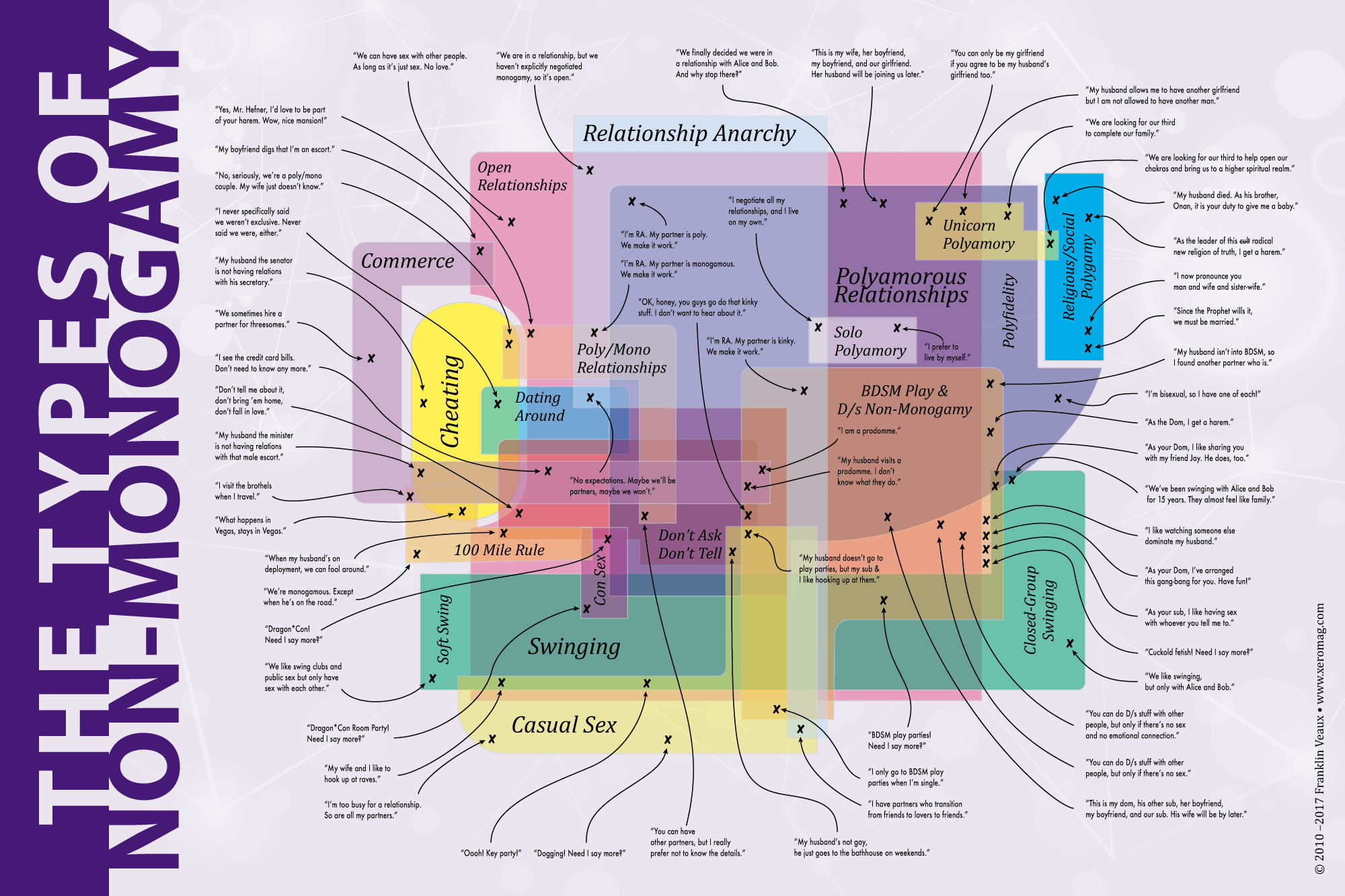
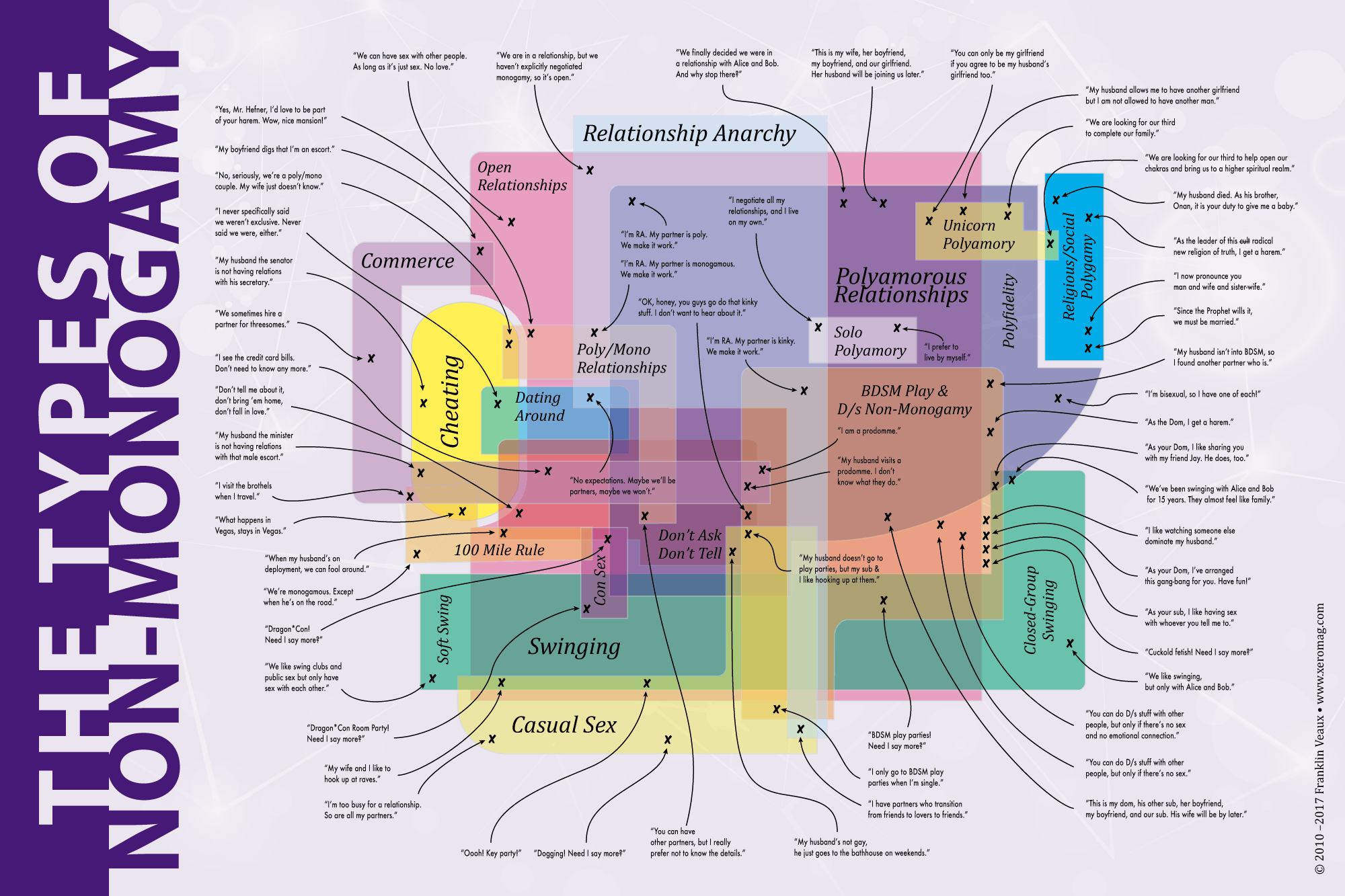
One of the other problems I have with the use of the term “non-hierarchical polyamory” is how many polyamory purists have determined that it is the only “right way” to practice poly. As a result, many people call themselves “non-hierarchical” so that they can appear to practice the “most ethical” form of polyamory. But many who declare themselves to be non-hierarchical leave it at that, without doing any of the difficult work it takes to dismantle hierarchy in our relational orbits.
The problem with gatekeeping in ethical non-monogamy and polyamory is that it contributes to increased shame in those who are perceived to be practicing non-monogamy in the “wrong” way. And the more shame we have, the harder it is to take an honest look at ourselves and do the necessary work to dismantle hierarchy. Shame also makes it more difficult to handle feedback and criticism. So if we believe we have to be perfectly non-hierarchical in order to be ethically non-monogamous at all, any criticism about the way we operate in our relationships - for example, a partner telling us that they don’t feel equally valued by us in comparison to our other partners - will be much more difficult to receive. We are no longer just receiving feedback about how we’ve hurt our partner - which is already difficult to accept in and of itself - we are now ascribing a much larger meaning to that feedback, believing that it reflects upon our ability to be non-monogamous at all, or even equating it to meaning that we, ourselves are unethical. So as you can imagine, the same gatekeeping that causes feelings of shame also leads to more defensiveness. Which is understandable, because none of us wants to be seen as unethical.
I also just don’t believe that non-hierarchy is inherently more ethical than hierarchy. What makes a relationship “ethical” is better determined by how you center consent and respect for each person’s choices and personal autonomy. And no matter the type of non-monogamy you practice, everyone’s autonomy should be respected anyway.
Explicit agreements make all forms of non-monogamy more ethical
Part of the movement to make non-hierarchy the most ethical form of polyamory has to do with the concept of “veto power”. “Veto power” means one partner has a say in their partner’s relationship with others that they are not a part of. This would look like a primary partner “making” their partner cancel a date with a secondary partner or end the relationship all together. So the concept of “veto power” translates to a total imbalance of power not just for the secondary relationship, but in the primary relationship, too.
As a non-monogamy coach and educator I am constantly preaching the importance of using agreements as opposed to rules. We don’t own our partners, so we can’t “make” them do anything. If you’re ending a relationship with someone outside of your primary partnership, it should be an active decision you are making rather than something you are doing because they are making you. And if you’re committing to agreements that you’re not actually okay with, this will lead to resentment anyway. So it’s important to always be reevaluating and updating your boundaries and agreements.
How do you ensure that everyone’s autonomy and rights are equally respected - whether you call yourself non-hierarchical or not? You can accomplish this through clear communication of boundaries, expectations, and agreements. As opposed to making a blanket statement like “all of my relationships hold equal weight in my life”, you could say, “I strive to give all of my partners equal priority”. The problem with making blanket statements about how we will or won’t operate in our relationships is that it can lead to perfectionism, which makes taking feedback even more difficult when we aren’t meeting those expectations for our partners. So a great place to start is by acknowledging that you will never be perfectly non-hierarchical - just how I love relationship anarchy as a driving principle, but acknowledge that I will never be able to perfect it practice.
Some agreements you can make to equally respect everyone’s autonomy and rights in place of “hierarchy” or “non-hierarchy” could be agreements around time - clearly communicate how much time you can dedicate to each relationship so your partners can decide if that will meet their own needs and boundaries. You could also make agreements around communication - the frequency of communication, and what things you are expected to communicate with your partners about.
Trade in veto power for self reflection
If you’re a primary partner who has been tempted to “veto” your partner’s other relationships, I encourage you to assess where that urge is coming from. The desire to make your partner do something, like cancel a date or end another relationship, comes from the need to feel in control. And the need to feel in control usually comes from fear. In the case of non-monogamy, that fear is almost always about losing our partners or being replaced completely.
So instead of trying to control your partner and their other relationships to avoid the fear, lean into that fear. Get curious about what’s driving that fear, because it holds a wealth of information. It may show you something you need from your partner to feel more comfortable with their other relationship - like more communication, check-ins, or intentional quality time. Or it could point to your own insecurities that are causing you to compare yourself to their other partners - ones that you can most definitely work on and improve once you stop avoiding them.
Non-hierarchy as a driving principle
Let’s say you are in a primary relationship and you want to practice non-hierarchy with your other partners. If you’re transitioning from a couple relationship to non-hierarchical polyamory, there is a lot of unlearning to do - specifically as it relates to couple privilege. Couple privilege refers to the unearned benefits ascribed to couples via social norms and legal rights. An example of a couple privilege would be we’re usually allotted a plus one to family weddings, but never a plus two. Or, that your family expects that your long term partner will be at family functions, but would be confused or judgmental if you brought your new partner. If non-hierarchy were a driving principle in how you relate, you might invite your new partner to events they would be accepted at. But for many people, their families will never accept that they are poly - so then you might ask your new partner “What are other ways I can make you feel equally valued in my life since I cannot introduce you to my family?”
In conclusion…
Holding non-hierarchy as a value rather than a strict relationship structure allows more room for the complexities that having multiple romantic partners inevitably creates. So let’s stop debating whether non-hierarchical polyamory is better than hierarchical poly, and stop misusing this term that’s so often fundamentally misunderstood. Instead, let’s put that energy in reflecting on how we can intentionally dismantle hierarchy in our relationships a little bit every day.